With the 2020 presidential elections fast approaching, we decided to survey voting-age Americans about how they choose their candidates, and how that process compares with other key decisions they make in their lives, namely who they choose for their partners and spouses.
The results provide a fascinating glimpse into the fickle nature of American values and how they toggle and shift when applied to the collective vs. personal areas of our lives. For example, 78% of Americans say that race plays no factor in who they decide to vote for. That number plunged dramatically, however, when it came to choosing a spouse or partner: only 56% of people said the same thing about who they would marry, implying that we’re much more progressive when deciding who to let into the White House than into our own house.
Many other surprises emerged from the survey, from the fact that Americans overwhelmingly prefer an honest president to an intelligent one--though they demand much less intelligence from their spouses than they do from their candidates’--to the fact that the richest and poorest Americans are the two income groups who care the least about a candidate’s work ethic.
So, what do Americans look for when choosing a presidential candidate, and how do those factors change when searching for a partner? Read on for some fascinating insights into American views of leadership, love, and what we want from each.
The Survey: How It Worked
Our survey consisted of more than 1,000 anonymous and randomly selected Americans of voting age. It included 5 pairs of near-identical, multiple choice questions. Each pair of questions had the same answers to choose from, the only variation being whether the question was about a presidential candidate or a romantic partner. For example:
What is most important to you when deciding who to vote for in a presidential election?
- Honesty
- Intelligence
- Charisma
- Communication skills
- Empathy
- Impulse control
- Work ethic
What is most important to you when choosing a romantic partner?
- Honesty
- Intelligence
- Charisma
- Communication skills
- Empathy
- Impulse control
- Work ethic
The results allowed us to objectively compare how Americans make political and personal decisions, and gave us a fascinating look into what we prioritize both as we enter the voting booth and the dating pool.
To Americans, Honesty is the (Only) Policy
It’s not surprising that Americans value honesty in a presidential candidate. What is surprising is that they prioritize it over just about every other trait, including intelligence and work ethic.
While you’d think that we cast our votes based on nothing but cold hard policy, respondents overwhelmingly prioritized a candidate’s intangible characteristics, such as honesty and communication skills, over more measurable skills--the same as they do when considering a lifelong partner.
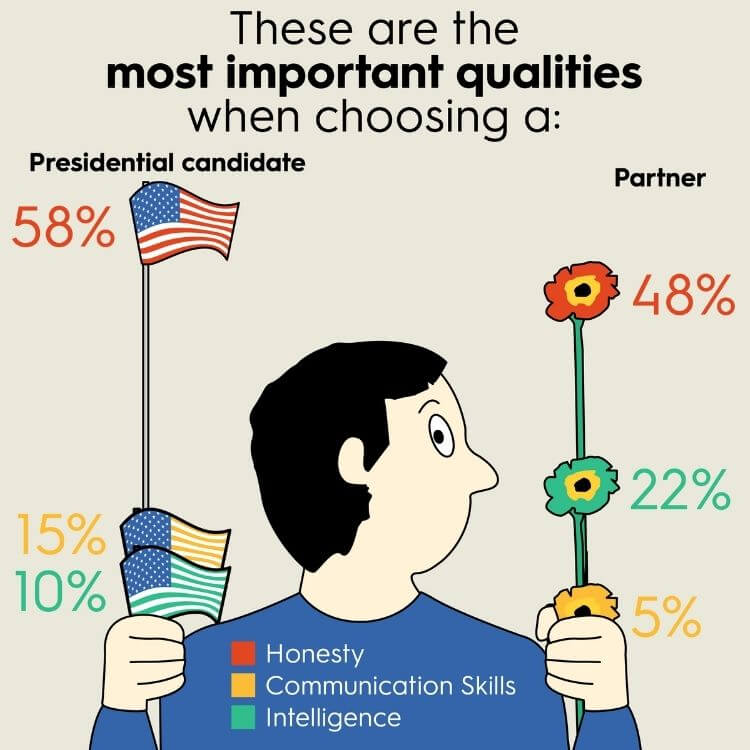
- When choosing a presidential candidate, respondents overwhelmingly prioritize honesty (47.6%) over intelligence (22%), work ethic (12%), and communication skills (5%).
- This is almost identical to what we look for in a partner. The majority of Americans (58%) see honesty as the most important quality in a spouse. Communication skills landed in the second slot here (15%), followed by intelligence (10%) and empathy (8%).
The Bigger Picture Trumps the Small Details
Surprisingly, respondents are more influenced by a presidential candidate’s overarching vision than any actionable skills.
When asked about their ideal candidate:
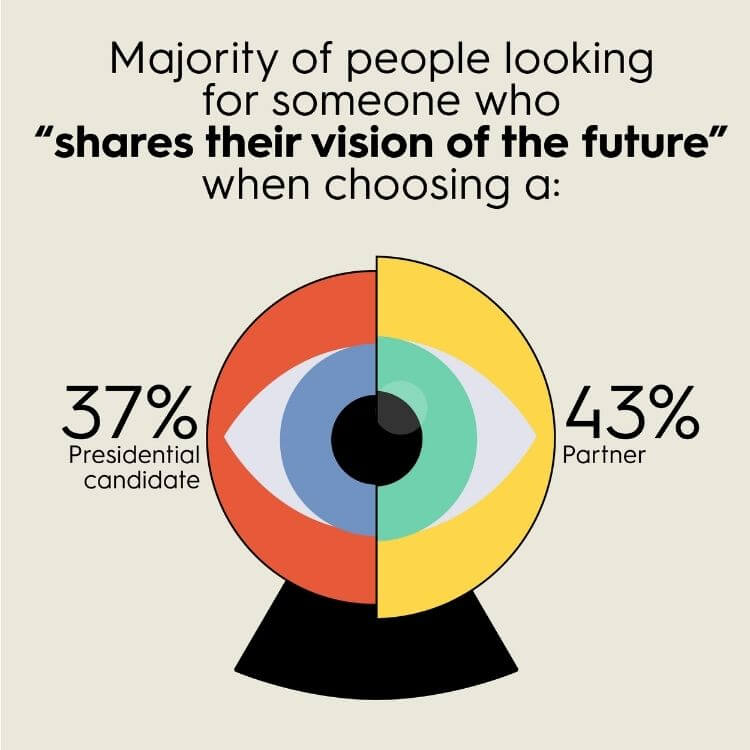
- The majority of respondents chose a candidate who “shares my vision for the future” (37%), which easily beat out a candidate who “can provide security and protection” (27%) and one who “can provide material and financial support” (12%).
Respondents expressed the same sentiment when speaking about an ideal partner:
- “Shares my vision for the future” also received the majority votes as the most important trait in a potential partner (43%), beating out “understands my needs” (34%) and “can provide security and protection” (9%).
Attitudes Towards Race, in the White House vs. the Home
The next pair of questions was: “To what extent is race a factor for you when choosing a presidential candidate/romantic partner?”
Surprisingly, Americans seem more tolerant when it comes to politics than their personal relationships:
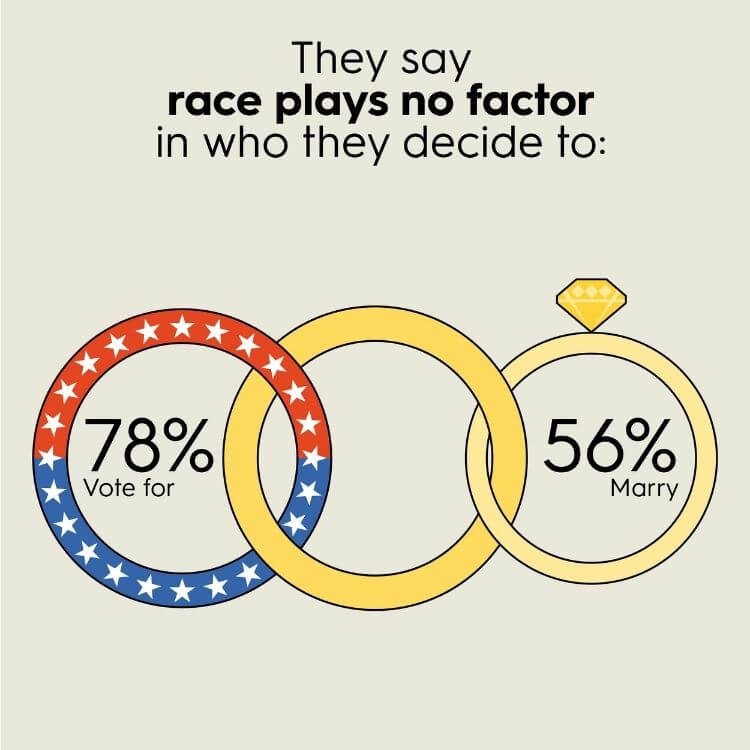
- 78% of respondents said that the race of a candidate was “not at all” a factor in their voting decision.
That number sharply decreased, however, when it came to their romantic partners:
- Only 56% of people said that the race was “not at all” a factor when choosing a romantic partner.
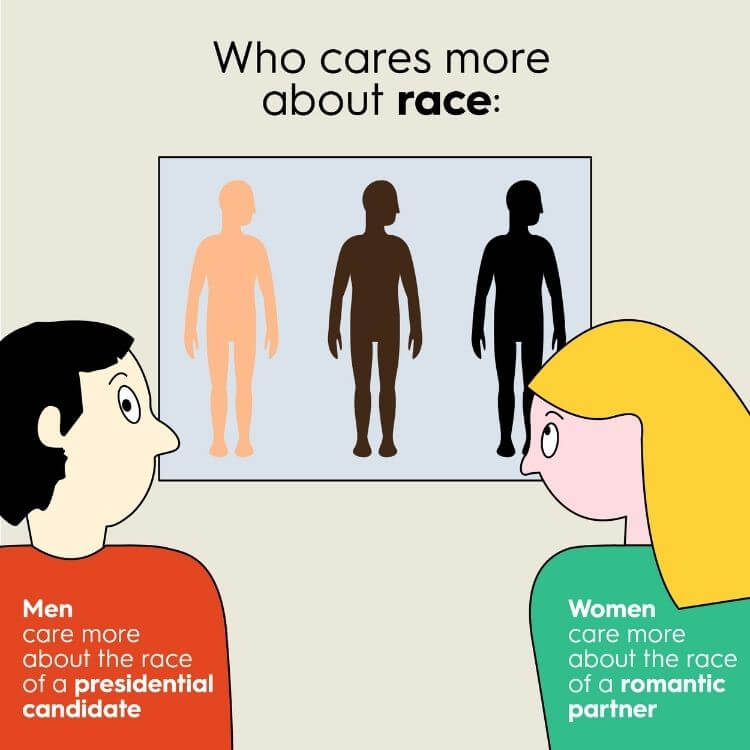
Interestingly, women care less than men about the race of a presidential candidate, while men care less than women about the race of a romantic partner:
- 8% of men said the race of a candidate was “very much” a factor in their voting decision, while 6% of women said it was “very much” a factor.
- Conversely, 15% of women said race was “very much” a factor in choosing a spouse, while only 12% of men said it was “very much” a factor.
Age also played a role in respondents’ views towards race. According to the survey, older people are less likely to let race influence their voting decisions than their younger counterparts:
- Just 2% of people aged 60 and up said that race was “very much” a major factor in their voting decision. Meanwhile, race was “very much” a factor in 6% of people aged 45-60, 10% of people aged 30-44, and 7% of people aged 18-29.
We see almost the exact opposite results, however, when it comes to race and romantic relationships, with older people letting race influence their relationships the most and young people caring the least about the race of a potential partner or spouse:
- 12% of people in the two youngest age brackets (18-29 and 30-44) said that race was “very much a factor” in their romantic preferences. The number rose from there, with 14% of people aged 45-60 and 17% of people aged 60 and up saying race plays a major factor in how they choose a partner.
Brains Matter in a President, Not So Much in Our Partners
When it comes to intelligence, Americans demand much more from their president than their partner. More than twice the amount of people prioritize intelligence in their next president than in a partner.
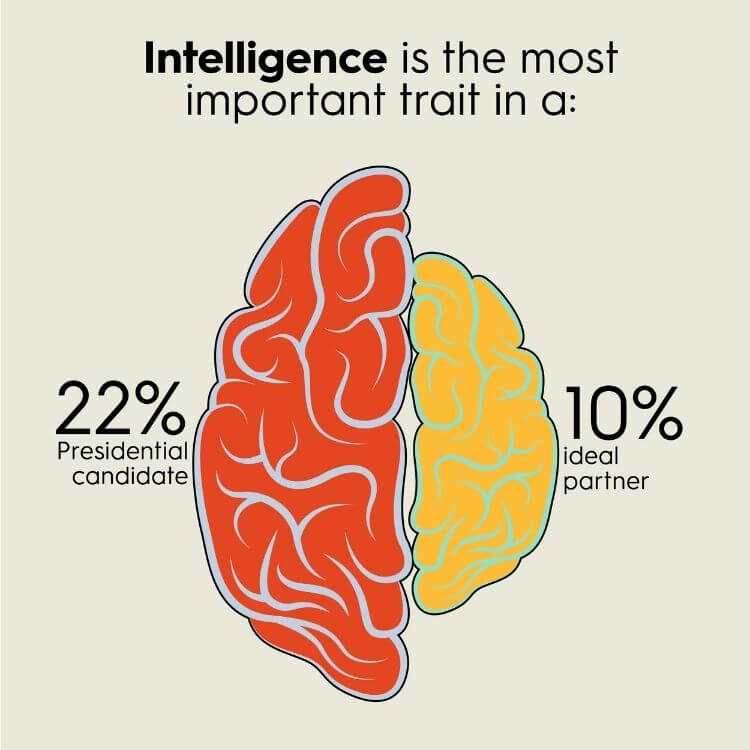
- 22% of all respondents said intelligence was the most important trait in a presidential candidate
- Only 10% said intelligence was the most important trait in their ideal partner
- Men find intelligence more important in both a president and a partner. 25% of men believe intelligence is the most important trait in a candidate compared to 19% of women, and 12% find it the most important trait in a partner compared to 7% of women.
- Women, meanwhile, find communication skills more important in both a president and a partner.
Other Interesting Finds
People in the highest and lowest income brackets were the least likely to care about a president’s work ethic.
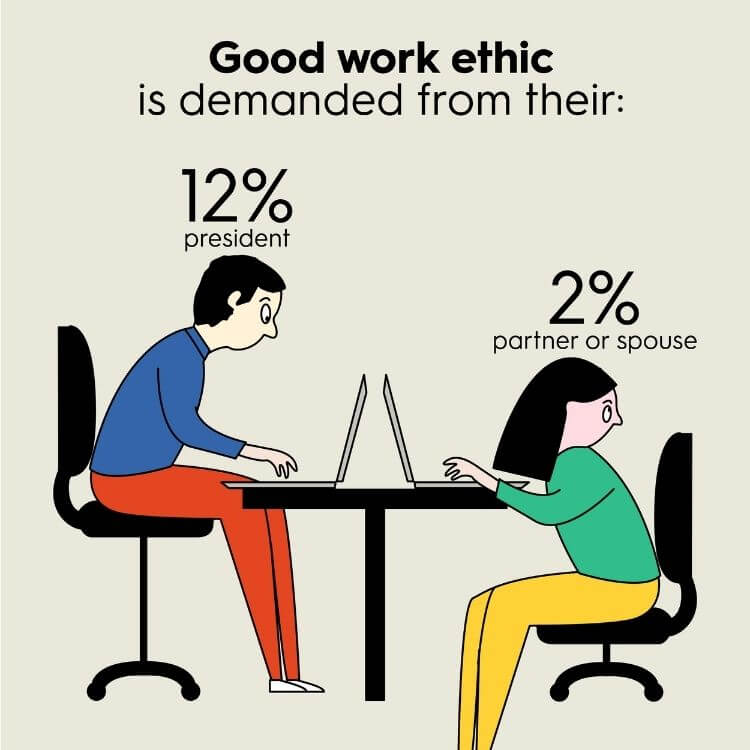
- 12% of people demand that their president have a good work ethic, while only 2% demand the same in a partner or spouse.
- Americans expect material and financial support to come from their president more than from a spouse.
- 15% of people believe that communication skills are the most important quality in a romantic partner, while only 5% believe they’re the most important quality in a president.
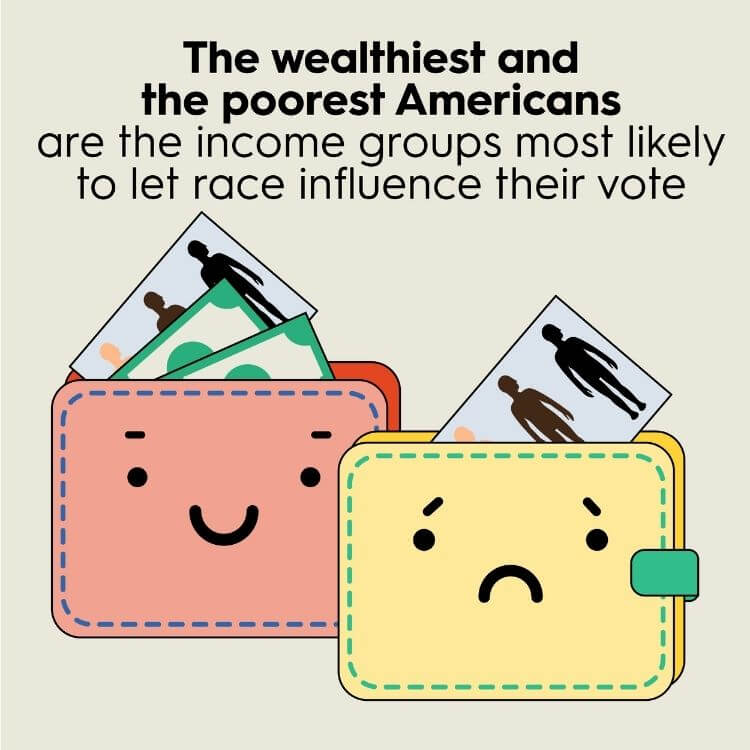
- The wealthiest and the poorest Americans are the income groups most likely to let race influence their vote.
- People find impulse control a more important trait in their president than their spouse.
Americans Are Idealists, in Politics and in Love
When it comes to earning the American vote, future candidates might be wise to campaign as though they were wooing a potential love interest. Simply put, Americans seem to be more idealistic than practical with their votes as well as their hearts.
One of the major themes that emerged from the survey is that our voting decisions are largely based on sweeping intangibles such as honesty, communication, and vision. We value noble behaviors more than actionable skills, prefer ideas over work ethic, and are more swayed by a candidate’s long-term vision than their short-term promises.
So what does that say about leadership? About love? About American values? As we enter perhaps the most heated and important election of our lifetimes, it’s interesting to note what draws us to a candidate, and what draws us to a life-partner. The two may be worlds apart, but our views and expectations of them are more similar than we think.
You may also like:
The Best Dating Sites and Apps for Falling in Love
Survey Says: What Percentage Of First Dates End Back At Someone’s Place?
Credit for all images: Yael Shinkar