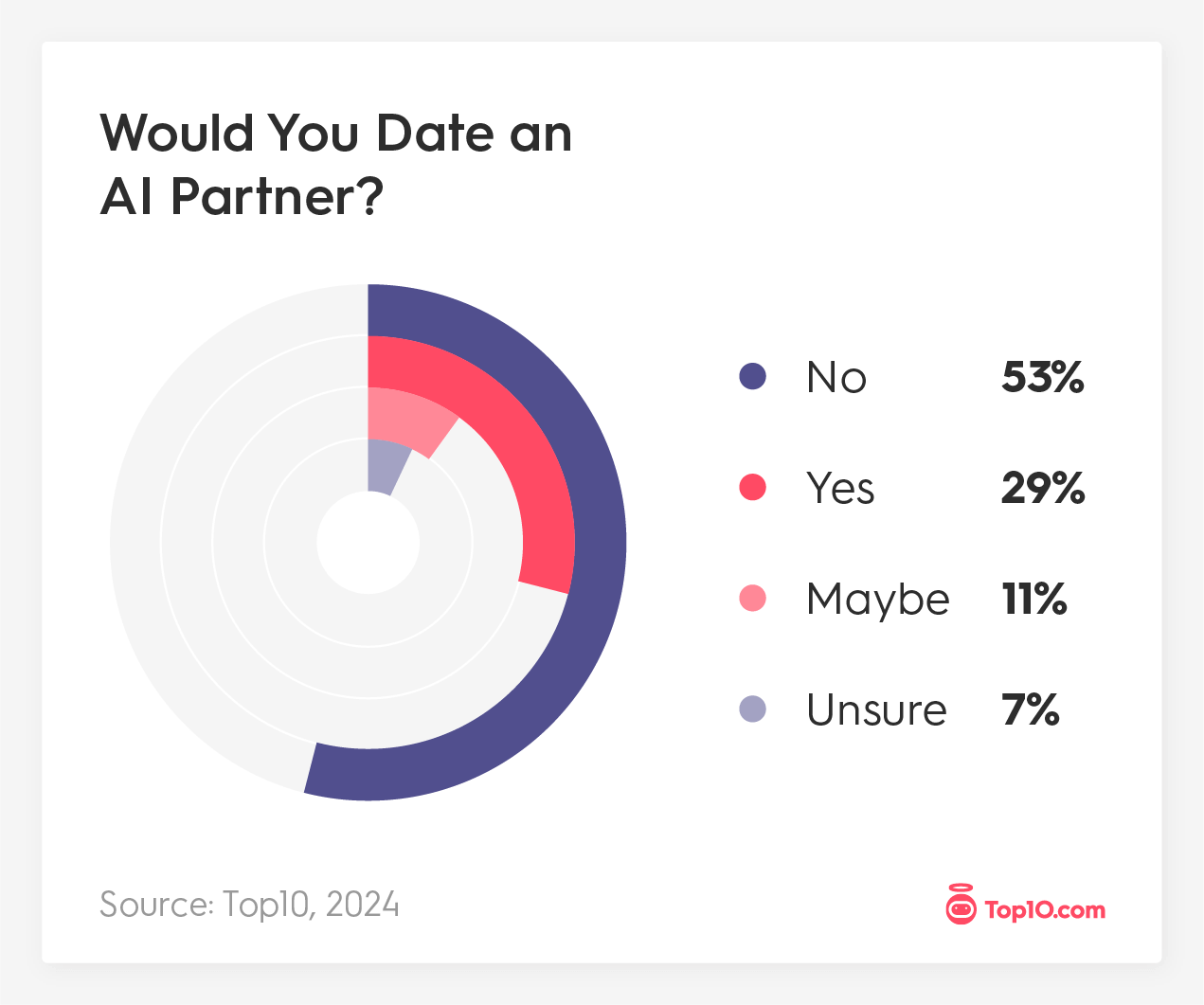
Long gone are the days of personal ads in the newspaper. According to 2023 data from the Pew Research Center, 42% of adults believe online dating has made finding a long-term relationship easier. Now, with 40% of people willing to consider dating an AI partner, the evolution of artificial intelligence is adding new layers of possibility to the search for “The One."
Key Takeaways:
- 40% of people are open to the idea of dating an AI partner
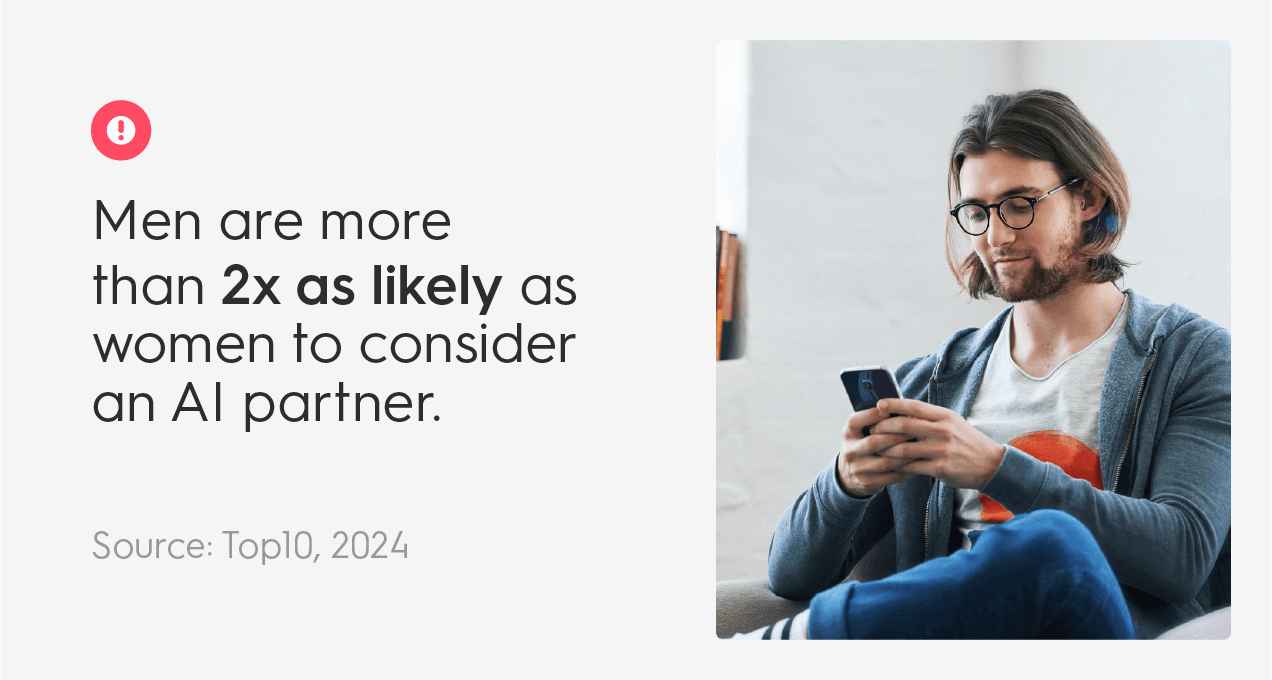
- Men are more than 2x as likely as women to consider an AI companion
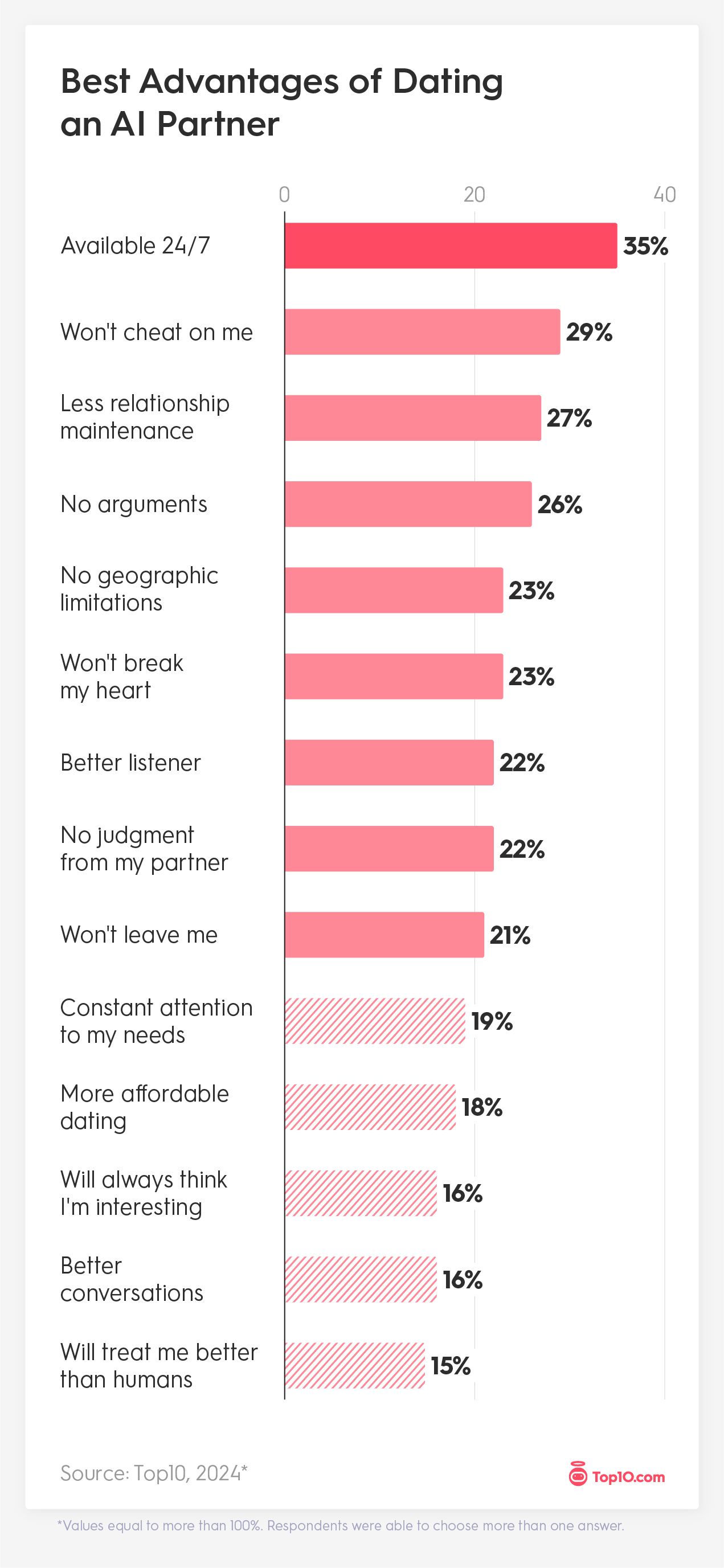
- 29% of respondents appreciated that an AI lover won’t cheat on them
- Over half of respondents are really creeped out by the idea of AI dating
- 33% are willing to let AI draft their online dating profile
2 in 5 People Think Dating an AI-Generated Companion Is Worth Considering
Out of the 1,001 adults surveyed, nearly 3 out of 10 said that they were absolutely open to the idea of dating an AI partner. When combined with another 11% of respondents who said maybe, we discovered that 40% of people would consider dating an AI companion. In contrast, 53% of the overall respondents said “no” to even considering the idea.
When we break those same responses down along gender lines, we noted that men were more than twice as likely to consider dating an AI partner than women, with 40% of men saying “yes” compared to only 18% of women.
On the flip side, women were much more against the concept. 63% of female respondents were opposed to it, as were 44% of men.
29% Love That an AI Partner Won’t Cheat
Speaking to the relationship fears many of us carry, 29% of all respondents felt one of the biggest advantages of an AI partner is that they won’t cheat. Around 23% appreciated that the computer-generated love won’t break their heart, and 21% were happy to realize that their AI companion won’t leave them.
These perceived advantages align with the findings from another recent Top10 study on situationships where 1 in 5 adults between the ages of 18-29 say the risk of settling for the wrong person is their main reason for avoiding commitment.
The focus on the potential for betrayal in modern relationships makes sense when we recognize that, as of 2021, approximately 21% of Americans admitted to having cheated on a current or previous partner. It's interesting to note that at least one company has already pulled their “erotic roleplay” options from their AI companions, resulting in some very real emotional turmoil for its customers.
We asked survey takers to identify the biggest advantage of dating an AI partner over a human. We were surprised to learn that 35% of respondents felt the AI’s constant availability was the best feature. It was the most popular response among both men (36%) and women (33%).
Perhaps that should come as no surprise since. "All relationship partners want their needs to be high priorities to their significant others," notes Dr. Randi Gunther in Psychology Today. "Yet, in many situations, even the most devoted of partners either can’t, is unable, or simply doesn’t want to respond as desired.” Compared to human partners, an AI companion is available 24/7 to prioritize your attachment style needs.
On the more practical side, we discovered that men (24%) are twice as happy as women (12%) for the affordability of an AI boyfriend or girlfriend. An AI romantic partner can be quite budget-friendly, since there is no need to woo them with expensive dinner dates and gifts..
56% Would Miss Real Emotions With an AI Companion
Results revealed that lack of real emotions is the top disadvantage most people see when contemplating dating an AI partner. 56% of folks felt that the emotional connection that comes with a romantic partner would be missing when they’re AI-generated. This sentiment was true across gender lines, with 53% of men and 56% of women noting this as their top answer.
The importance of an intimate understanding between partners was also visible in the results of our situationship survey, where the lack of an emotional connection was the number one fear the public has about situationships according to 21% of respondents.
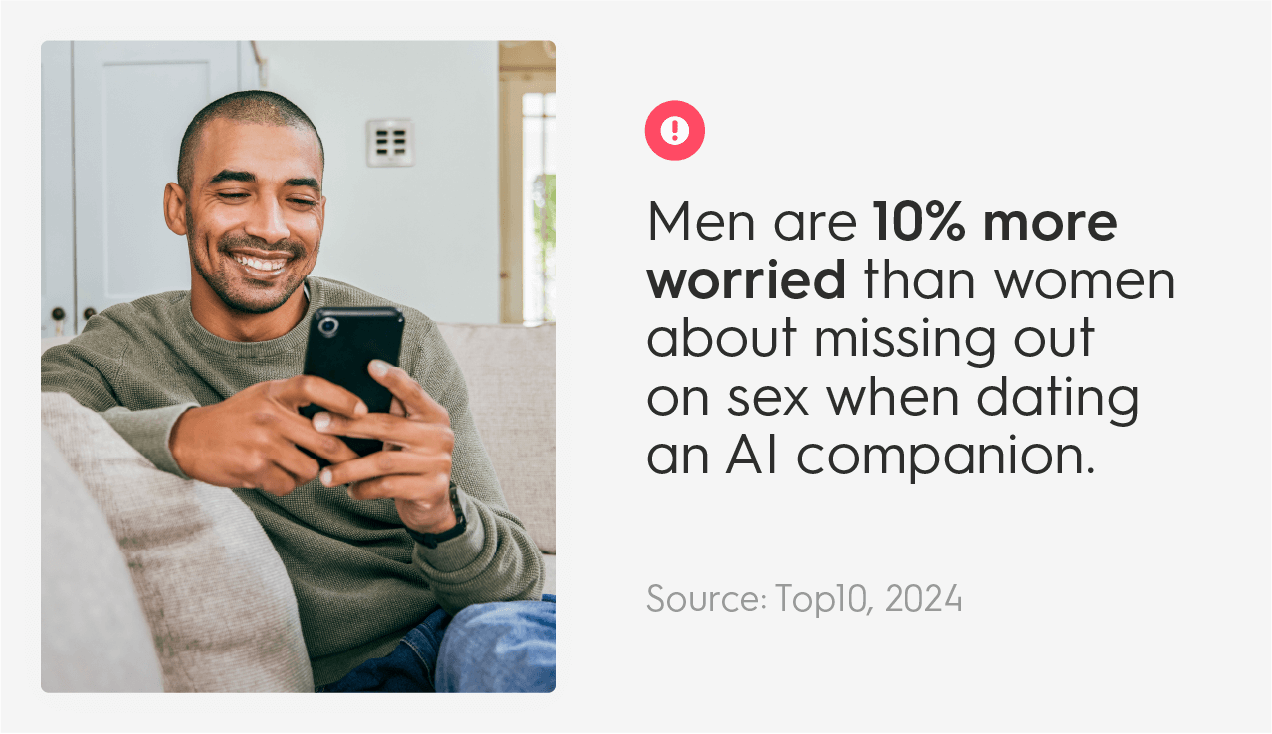
While you may have initially assumed that the lack of sexual intimacy would be the biggest disadvantage of an AI companion identified by respondents, it came in third, selected by 46% of people. It's interesting to note that, of those who chose this response, men were 10% more worried than women about missing out on sex.
51% Think Dating an AI Partner Is Creepy
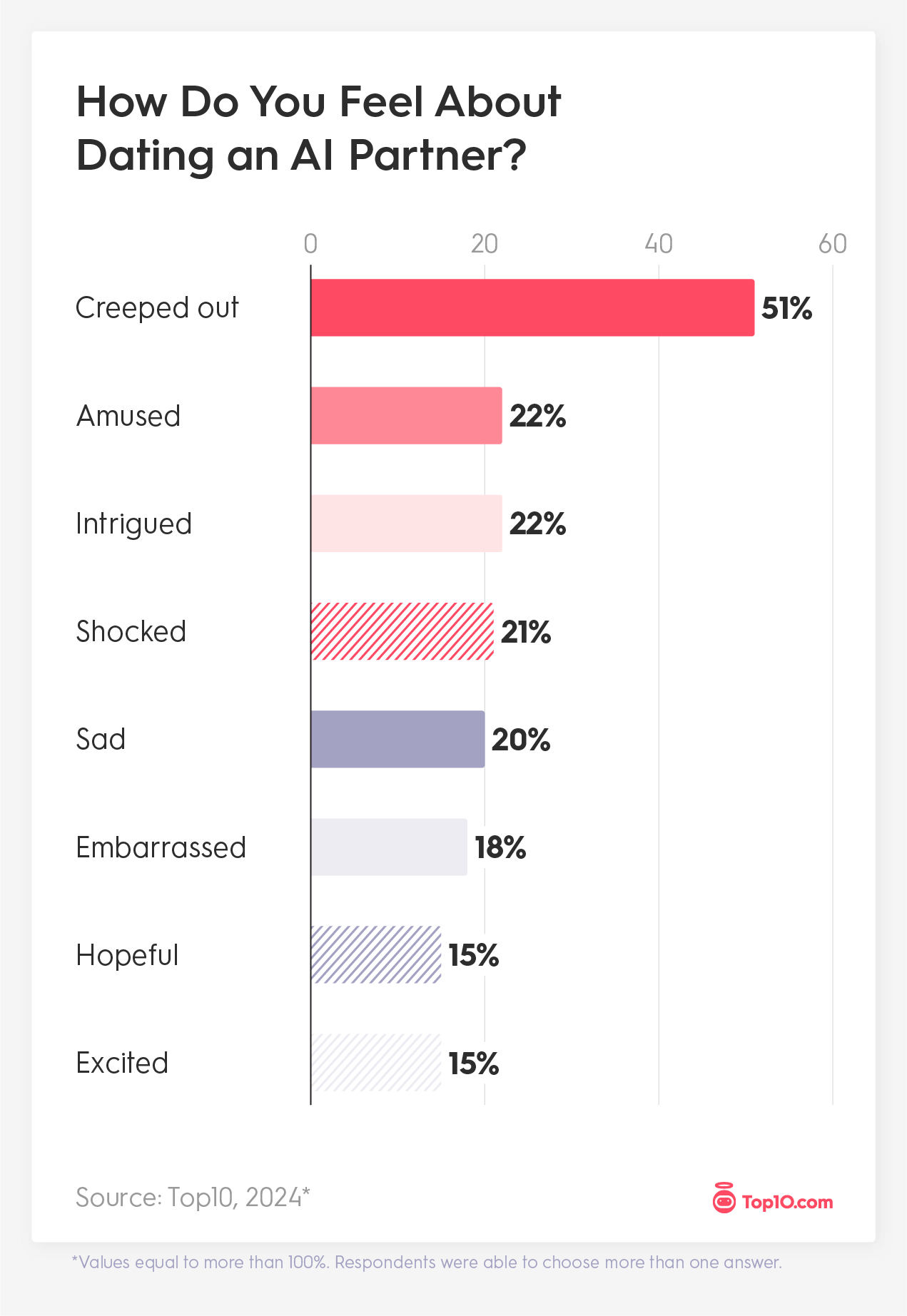
When offered a list of emotional responses to choose from when asked to consider the idea of an AI-generated romantic partner, “creeped out” was the overwhelmingly most common response selected by 51% of respondents. The two answer choices tied at 22% as the second most common responses were “amused” and “intrigued.” “Excited” and “hopeful” tied at 15% as the least common emotions people felt when contemplating AI dating.
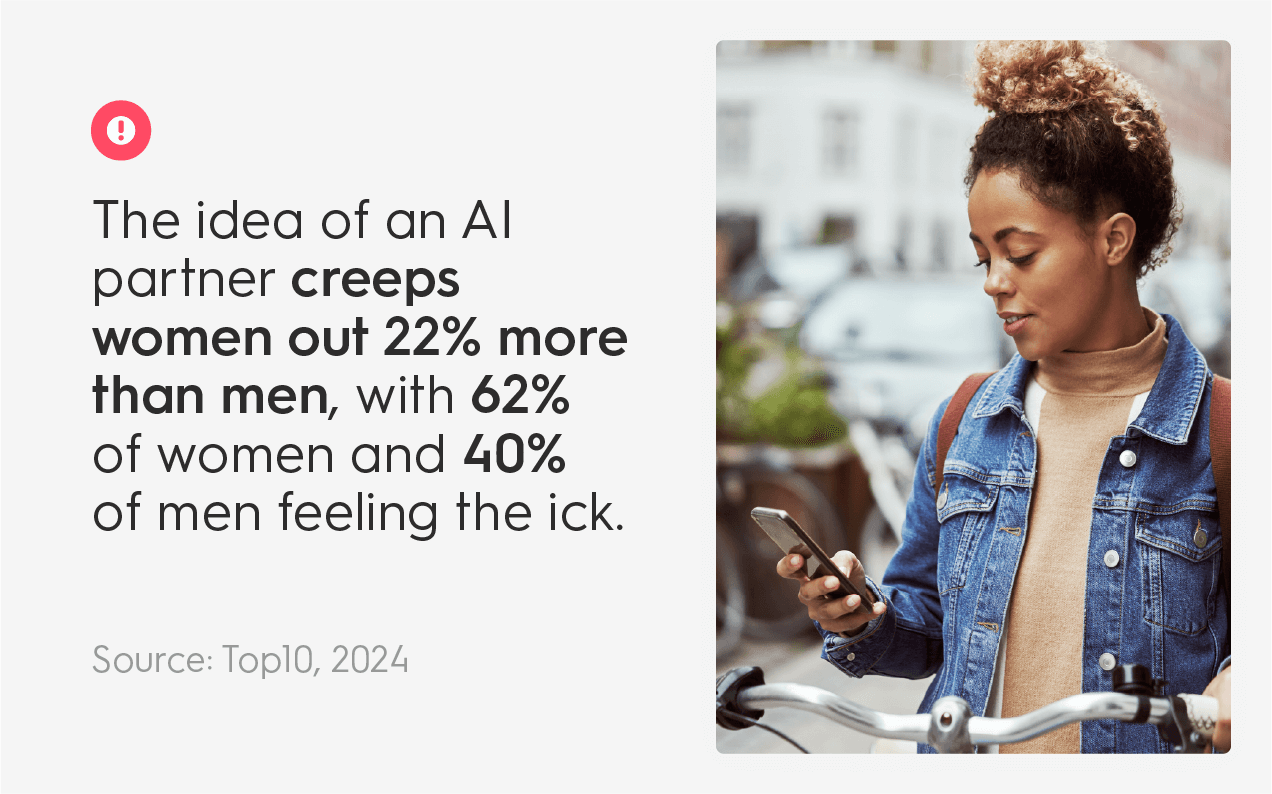
When we examined the results through a gender lens, women were 22% more creeped out than men, with 62% of women and 40% of men feeling the ick factor. But men’s emotional responses scored higher than women in almost every other category.
Men were twice as likely to feel excited by the concept, with 22% of men and 9% of women selecting that response. They were also more likely to feel intrigued about the idea than women, 25% vs. 19%, respectively.
Male respondents (22%) were also embarrassed more by the concept than female respondents (15%). But, on the flip side of that embarrassment, men were more hopeful than women at the prospect of an AI companion, 20% vs. 11%, respectively.
Some 1 in 5 survey participants of both sexes were closely aligned on two of the emotional responses. 21% of each gender felt shocked by the idea of dating an AI, while 21% of men and 20% of women were saddened by the concept.
33% Have No Problem Letting AI Write Their Dating Profile
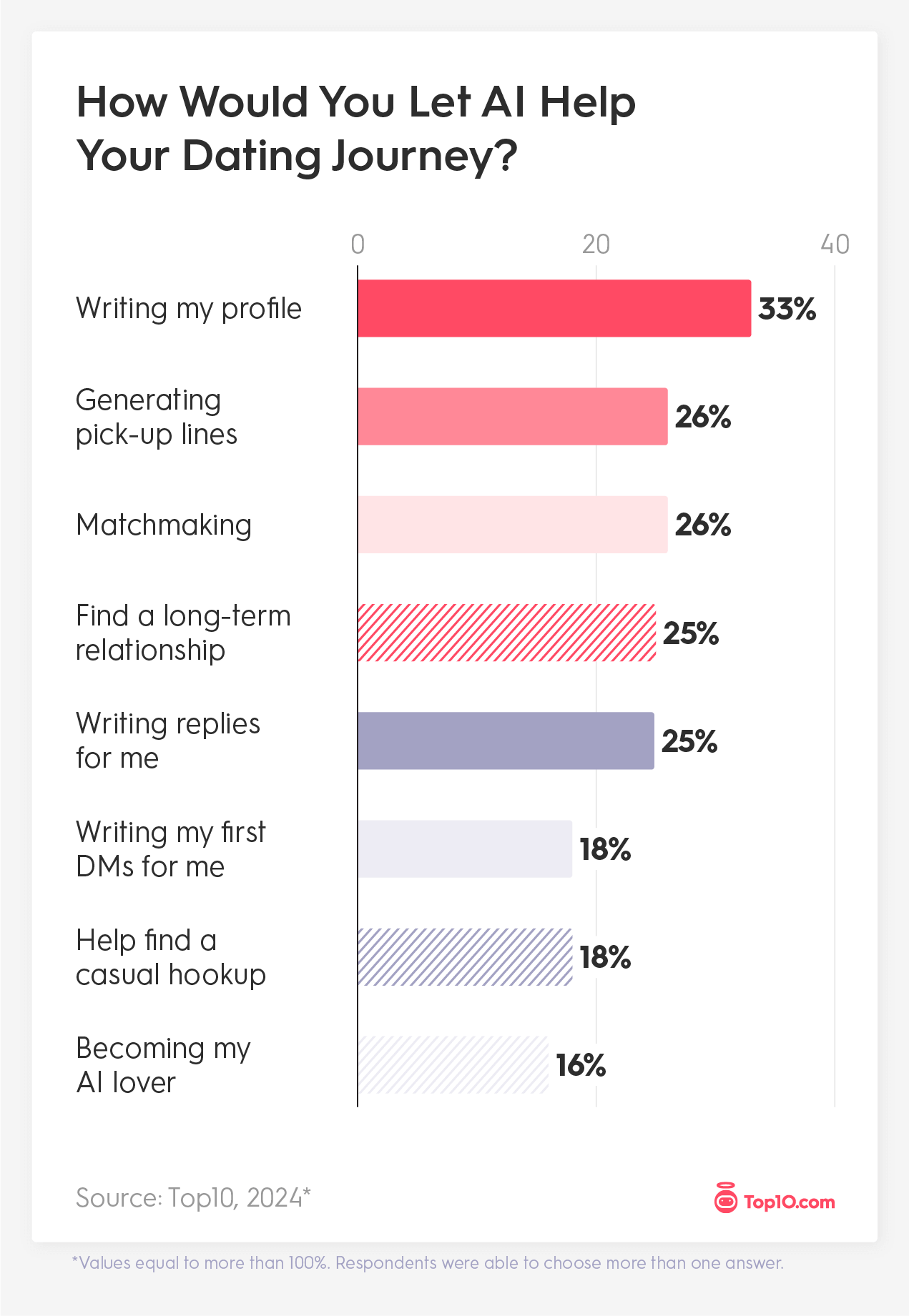
When examining the ways people are willing to incorporate AI into their dating journey, only 16% of survey respondents are ready to take on an AI lover. But 1 in 3 people are prepared to allow AI to compose their online dating profile.
Perhaps an AI-generated profile will innocently help bolster the self-confidence of the user, but a 2023 study from the United Kingdom revealed that 54% of single men were willing to “use ChatGPT to deceive a potential partner on a dating app in a bid to make themselves appear funnier or smarter when looking for love.” So, it’s important to be mindful of this dating red flag!
AI-generated pick-up lines were another popular idea, with 26% of people surveyed. If you’re willing to risk potential rejection, then using a pick-up line can be a great way to break the ice.
Protecting Yourself From Deepfakes
The use of AI in your dating journey does not automatically equate to a romance scam or catfishing, but it’s still smart to know what to look for to avoid deepfakes.
Deepfakes, as identified by the Department of Homeland Security, are a form of “synthetic media” that uses AI to “create believable, realistic videos, pictures, audio, and text of events which never happened.” The FBI now warns that some have evolved into sextortion schemes.
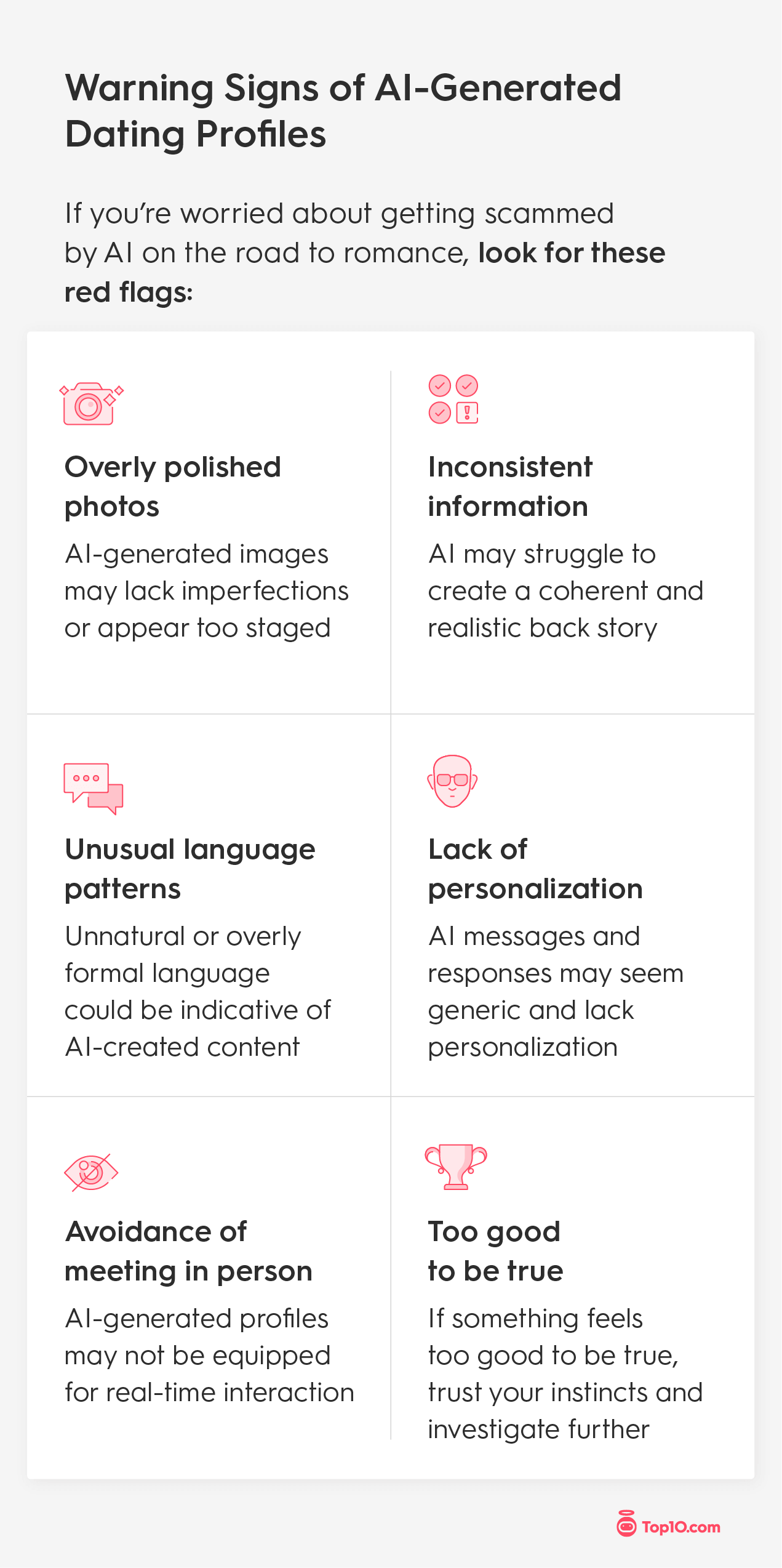
Although they are not exclusive to dating apps, deepfakes can be very believable. Keep these tips in mind to protect your heart:
- Overly polished photos: AI-generated images often have an unnaturally flawless look, lacking the imperfections and nuances usually found in authentic photographs. Look for meticulously crafted or staged pictures, as this is a possible red flag.
- Inconsistent information: Be wary of profiles with conflicting or implausible details, as the AI can struggle to create a realistic narrative. Inconsistencies in educational background, job history, or family details are worth a healthy dose of suspicion.
- Unusual language patterns: Keep an eye out for messages with unnatural or overly formal language, as these patterns may be evidence of AI-generated text. Automated responses usually lack the natural tone and communication style typical of everyday human interactions.
- Lack of personalization: AI-generated messages and responses frequently lack personalization, resulting in generic and cookie-cutter interactions. Authentic connections involve a personalized touch, so if conversations seem devoid of individualized elements or genuine interest, it could be a sign of an automated profile.
- Avoidance of video calls or meeting in person: Dating prospects that consistently steer clear of video calls or face-to-face meetings may be using AI-generated content that is not equipped for real-time interaction. Be cautious if your attempts to move beyond text-based communication are consistently met with resistance, as this behavior raises suspicions about the true nature of the dating profile.
- Too good to be true: Trust your instincts when online interactions seem unbelievably positive or unrealistic. If it feels too good to be true, take the time to investigate further. An AI-generated deepfake profile may use enticing details to lure unsuspecting users.
Find the Best Dating App for You
The search for love and companionship can be a stressful and bumpy road, so make sure you’re looking in the right place for you. Whether you try out an AI partner, incorporate some AI assistance into your chats with prospective love interests, or want to keep it old school, explore our list of the top 10 best dating apps that we trust to get you started on your dating journey.
Methodology
The survey of over 1,001 adults aged 18+ was conducted via SurveyMonkey Audience for Top10 on Dec. 9, 2023. Data is unweighted, and the margin of error is approximately +/-3% for the overall sample with a 95% confidence level.