Last Updated: Nov 2026
Best Dark Web Monitoring Services 2026
Be proactive — don't wait for it to happen to you


The internet can be split into three main parts: the surface web, which is searchable through Google and other search engines, the deep web, which contains everything that isn’t searchable, and the dark web.
The dark web contains a wide selection of legal and illegal websites. These aren’t indexable (can’t be found with search engines) and can only be accessed with the TOR web browser.
Many dark web websites deal with—or even facilitate—criminal activities, including identity and credit card theft. The nature of the dark web means that it’s difficult for law enforcement and other authorities to track down people participating in illegal activities.
It is worth noting here that it’s perfectly legal to use the dark web, and many people use it for legitimate purposes. For example, its anonymity means that it’s widely used by whistleblowers and political dissidents to reveal sensitive information.
It’s very easy for your information to get on the dark web. If it has been stolen or leaked at any time—such as during a website or database hack—it will likely find its way onto the dark web. Different types of personal information are sold or shared, including the following:
Social security number (SSN)
Name and address
Account login details
Driver’s license and passport details
Financial information
One of the most common ways that criminals use this information is to create fake identities. For example, they could create a driver's license and other ID documents and use these if they are arrested or need a “clean” ID.
It’s also quite common for criminals to steal credit card and other financial information. This can be used to embezzle money or other assets.
Wondering what to do if your information is on the dark web? Or what to do if your SSN is on the dark web? The good news is that there are a few clear actions that you can take to protect against dark web identity theft.
One thing that you should be doing if you’re worried is using an identity theft protection service. These are designed to monitor the web and alert you if fraudulent or suspicious activity is detected.
Many of the leading identity theft protection services come with powerful dark web monitoring, which is designed to detect any unauthorized use of your personal information. Some come with financial fraud insurance and most include tools to help you resolve identity theft issues.
For starters, it’s important to choose an identity theft protection service that comes with dark web monitoring tools. We’d also suggest setting your budget before you start searching for a program to ensure you don’t spend more than you can afford.
It’s also a good idea to take a close look at what tools different programs offer to help you resolve identity theft issues. Some even include professional recovery assistance if your info is detected on the dark web.
Many dark web identity theft protection services come with a selection of other tools. For example, you might get access to a VPN, a password manager, and antivirus software as part of your subscription.
Last, but not least, we’d suggest a platform that includes identity theft insurance. Some providers offer up to $1,000,000 in identity theft insurance, which will help you recover stolen funds.
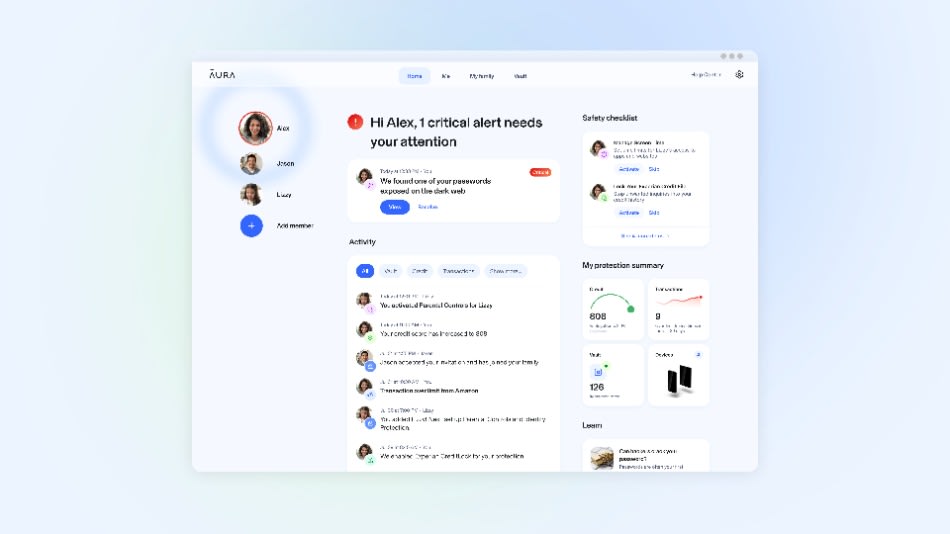
Aura provides robust protections against identity theft and financial fraud, including online account surveillance, financial transaction monitoring, and a secure digital "vault" for storing sensitive personal data.
Aura’s plans also include a range of privacy features – 200+ automated opt outs from data broker and people search sites, Google search result cleanup, and unused digital account cleanup to help reduce unwanted exposure online and reduce the risks of a data breach. The platform also offers the most comprehensive dark web monitoring among leading identity protection services.
The suite also features a password manager that simplifies the generation and storage of multiple robust passwords. Moreover, Aura's VPN utilizes high-grade encryption to safeguard your online activity, particularly on public Wi-Fi networks, and offers 100+ virtual locations. Additionally, Aura’s real-time antivirus and safe browsing tools, serve as a digital fortress against unwanted site trackers and fraudulent sites.
Aura monitors all three credit bureaus—Experian, Equifax, and TransUnion—as the Consumer Financial Protection Bureau (CFPB) recommends to detect identity theft and alert you in real time. The CFPB also advises vigilance for credit check inquiries from unfamiliar companies and suspicious accounts, all of which Aura can oversee for you.
Why we chose Aura: In the event of a data breach, Aura promptly intervenes with security alerts, comprehensive fraud resolution services, and up to $1 million per person in premium identity theft insurance. The platform's sleek, user-friendly interface also showcases a "Protection Summary," conveniently displaying active anti-identity theft measures on a central dashboard.
Our experience: We were impressed with Aura's 24/7 customer support service. We appreciated that their U.S.-based fraud resolution team was always ready to assist us personally in the event of fraudulent incidents. If a breach occurs, the team would collaborate directly with us to develop a recovery plan and resolve the issue.
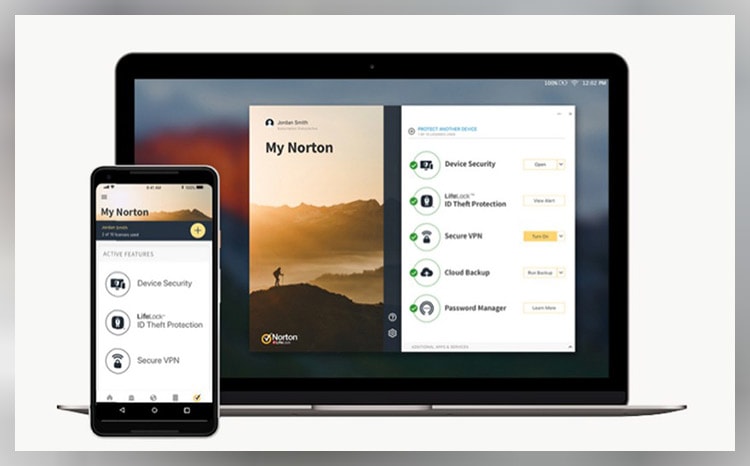
A product of anti-virus heavyweight Norton, LifeLock boasts the tech, accessibility, and ease that you’d expect from the industry-leading company. Most impressive are the plans themselves, which not only blend online security and ID theft protection but offer more flexibility than usual.
Lifelock’s plans include ID and Social Security number alerts and are offered in tandem with Norton’s 360 suite. This means that combo plans net you VPN services plus solid ID theft features like stolen funds reimbursement that ranges from $25,000 to $1 million dollars, bank account and credit card activity alerts, and even 401(k) investment account alerts on the Ultimate Plus plan.
LifeLock also offers LifeLock Junior, an affordable add-on for children under 18 that includes
Dark web monitoring and file-sharing network searches. All plans include 24/7 live member support and the aide of US-based identity restoration specialists.

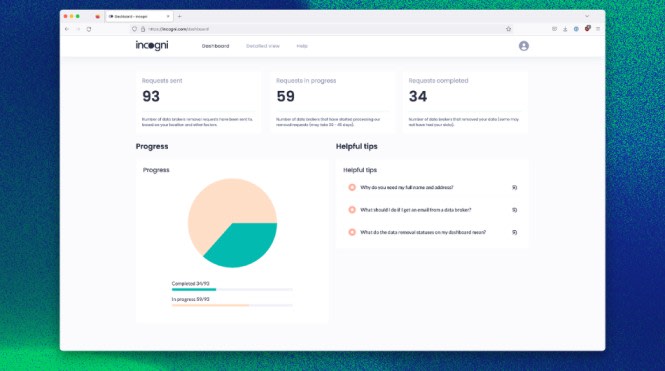
Incogni helps reduce your online exposure by requesting removal of your personal information from data brokers and people-search websites. Its standard coverage includes 420+ broker sites, spanning public listings and private databases that may collect, share, or sell your information.
Getting started involves creating a profile, providing identifying details, and signing an authorization form so Incogni can act on your behalf. The service then handles removal requests, reducing the need to contact individual brokers yourself. You can include multiple email addresses, phone numbers, and past addresses to help it address more of your digital footprint.
Because personal information can reappear, Incogni regularly repeats removal requests and checks public people-search sites for new listings. A dashboard and regular privacy reports help you follow its progress without managing each request individually.
For information exposed beyond standard coverage, Incogni’s Unlimited plans include custom removal requests for eligible websites. Privacy specialists handle these requests, and the plans also include live phone support. Family options cover up to five people, with each member receiving their own data removal service.
Why we chose Incogni: Its combination of public and private broker coverage, recurring requests, and progress reporting makes it a practical choice for people who want ongoing data removal with minimal involvement. Custom removal options also offer flexibility for users with information appearing on additional websites.