Implementing CRM software empowers your team to increase sales, improve retention, streamline funnels, and enhance online marketing efforts - even when you're leveraging free lead generators or posting on free ad sites. Its integrated approach drives conversion and efficiency while fitting into any budget.
Customer Relationship Management (CRM) software is a centralized platform that stores customer and lead information, enabling teams across sales, marketing, and support to collaborate and automate workflows efficiently.
Modern businesses rely on a range of online channels—free lead generators, ad posting sites, and DIY tools like “how to make a website for free”—to attract prospects. Without CRM, these leads often get lost in spreadsheets. CRM ensures every lead is tracked and followed up smoothly.


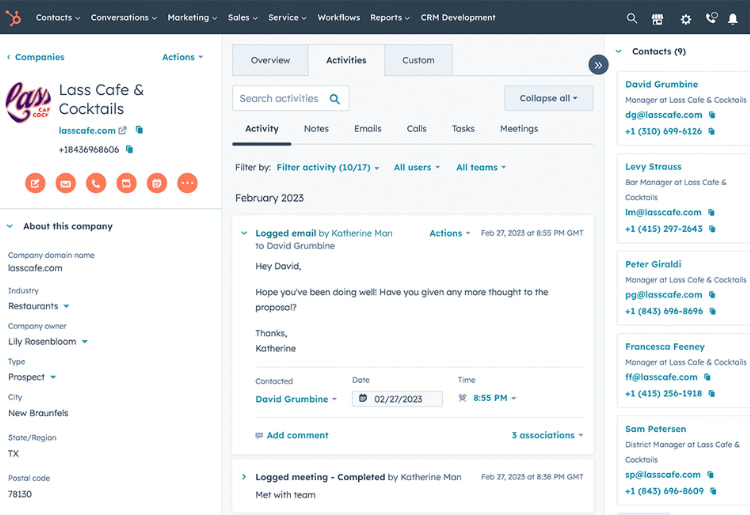
HubSpot’s CRM software is free and therefore best suited to small businesses that only need the core essentials. That said, it’s earned high reviews and offers a solid line-up of tools that make it worth considering for SMBs looking to increase sales.
HubSpot CRM has a clean dashboard that lets you sort deals and track all pertinent information which can be sorted by lead status, name, amount, or by custom filters, all so businesses can view their sales funnel in real-time. The software syncs up with Gmail and Outlook and includes tons of free communications tools such as live chat, cross-team emails, and a central inbox for sales, marketing, and customer service teams to manage conversations.
Most notably, HubSpot allows an unlimited amount of users and storage that can reach up to a million contacts. While limited for clients with advanced needs, HubSpot exceeds what you’d expect for free software and is a capable solution for small businesses looking to improve organization and productivity.

Great for - Visual thinkers
Price - $8 per seat per month (3 seat minimum)
Free trial - 14 days
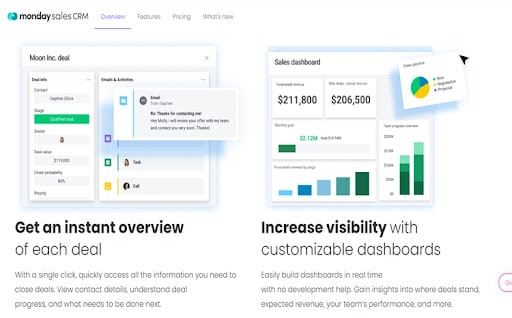
Monday sales CRM manages to provide a wealth of CRM features without overloading the user. Its visually stunning interface is remarkably accessible, with automated workflows and easy-to-use collaboration features. But there’s more underneath the surface, making it surprisingly capable both for those who only utilize its core features as well as those who need more advanced tools.
From small businesses to enterprise organizations, monday sales CRM offers an approachable, scalable CRM that can adapt to almost every user’s needs.

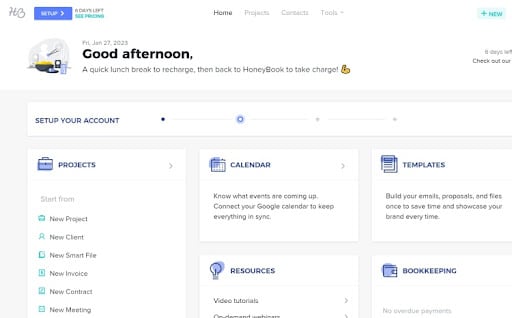
HoneyBook positions itself as an all-in-one CRM that you can use to track leads, communicate with clients, and share documents. The tool has an intuitive workflow, allowing you to manage your clients through to invoicing and payments. There are some automation features and basic integrations like email, Calendly, and Zoom, but some enterprise users may find these options lacking. That means, although it offers unlimited team members with its subscription plan, it’s a platform best suited to freelancers and small businesses.
HoneyBook provides a hands-on, free migration and set-up service when you subscribe. This means that HoneyBook has a low technical barrier to entry for first-time CRM users. We found the platform easy to use, and the customer support via live chat knowledgeable and helpful. There is a knowledge base and a weekly live educational webinar that can help you get the most out of the platform. So even though there’s no phone support, there are plenty of other support channels if you encounter technical issues.
Why we chose HoneyBook: For its user-friendly and intuitive workflow and end-to-end pipeline system.