Last Updated: Jun 2026
Top 10 Accredited Online Christian Colleges
Earn a degree at your own pace



 FAQs
FAQsAn online university is a fully digital institution offering degree programs through the internet. Students attend virtual classes, submit assignments, and communicate with instructors via a Learning Management System (LMS). This model is ideal for adults balancing jobs, families, or multiple commitments.
Courses are hosted on secure learning platforms
Students join virtual classrooms and interactive forums
Accredited programs award legitimate degrees equivalent to traditional colleges
Students can study anytime, from any location

Online Christian colleges can appeal to students who want flexible learning, faith-based values, and a wider range of degree options. Whether you are exploring religion studies or looking into an online theology degree, these programs can offer a more personalized academic experience that supports both your schedule and your goals.
Online colleges offer flexible, accredited degree paths designed for learners balancing school with work, family, or life transitions.
Most programs are self-paced and FAFSA-eligible, making them both accessible and affordable.
Fast-track bachelor’s degrees—some as short as 18 months—appeal to students seeking quicker results.
Strong student support services, like virtual tutoring and success coaches, help keep learners on track.
Choosing an accredited, well-supported, and affordable online program helps ensure a better fit for your goals and schedule.
Online colleges are surging in popularity thanks to their flexibility, affordability, and accessibility. In 2026, many Americans are choosing digital education to upgrade their skills or complete unfinished degrees.
Remote learning aligns with busy adult schedules
Most online colleges that accept FAFSA provide affordable financial options
Programs now include live sessions, labs, and simulations
Employers increasingly value accredited online degrees
Studying at one of today’s Christian colleges can give students the flexibility to pursue an online theology degree while exploring subjects like religion studies in a faith-based learning environment. For many students comparing the best Christian colleges, the right program offers a balance of academic support, personal growth, and online convenience.
At Top10.com, we recognize the importance of thorough and accurate product and service reviews in guiding your choices. Our team, comprising editors and industry experts, conducts extensive research to provide comprehensive insights. Our content is continually updated to reflect the latest market trends, offering current information.
We provide a range of services including comparison lists and in-depth reviews, all tailored to meet your specific needs. Our goal is to empower you to make confident and informed choices.

Online universities empower students with control, affordability, and access to diverse programs that fit around real life.
Flexible schedules: Learn at your own pace, any time of day
Lower costs: Save on housing, commuting, and campus fees
Wider access: Enroll in degrees unavailable locally
Digital readiness: Develop remote work and technology skills
Online study also connects learners worldwide, fostering multicultural collaboration.
Fully accredited online colleges in 2026 offer a vast selection of degree paths—from GED online programs to advanced master’s degrees.
GED online options for high-school equivalency
Associate and bachelor’s degrees in business, technology, education, and healthcare
Quickest bachelor degree programs using credit-for-experience and accelerated modules
Online MBA and master’s programs for professional advancement
Certificates and micro-credentials for targeted skill enhancement
Finding the least expensive online degree is about balancing tuition, accreditation, and support—not just low prices.
Compare the top cheapest universities by tuition and graduation rate
Ensure the institution is a fully accredited online college
Verify FAFSA eligibility and state financial aid options
Transfer credits from prior studies or experience
Look for college grants for adults or employer tuition programs
Tip: The quickest bachelor degree options use 8-week modules and generous transfer-credit policies.
When comparing online Christian colleges, many students look for a balance between cost, flexibility, and academic quality. Reviewing tuition, financial aid options, transfer credit policies, and programs like religion studies or an online theology degree can help narrow down the best Christian colleges for your budget and goals.
Based on data from the National Center for Education Statistics (NCES), about 53.2% of U.S. college students were enrolled in at least one online course (part of what NCES refers to as distance education) in Fall 2023, showing how online learning has become a regular part of higher education. An estimated 26% studied entirely online, underscoring the growing preference for flexible programs that fit around work and family schedules.
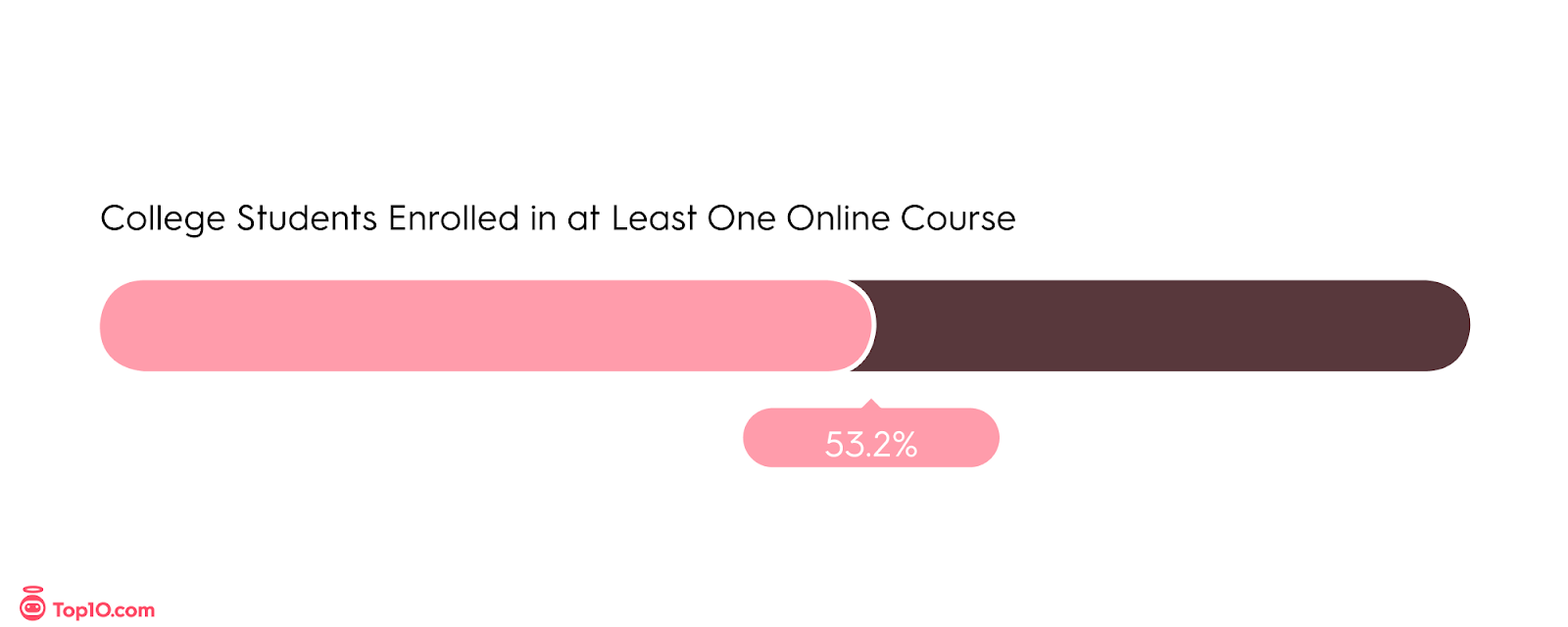
Source: National Center for Education Statistics (NCES)
Accreditation confirms that an institution meets national education standards. It directly affects financial aid, credit transfer, and employer recognition.
Check accreditation with CHEA or the U.S. Department of Education
Choose between regional or national accreditation based on your goals
Only fully accredited online colleges qualify for federal aid like FAFSA
Avoid unaccredited “diploma mills” that lack legitimacy
Selecting the right program ensures a better academic and financial outcome. Consider these key factors before applying:
Accreditation: Verify national or regional approval
Costs and aid: Compare tuition, hidden fees, and FAFSA availability
Student support: Ensure tutoring, advising, and tech help are provided
Outcomes: Review employment and alumni success rates
Yes, adults returning to school often qualify for a variety of financial aid options. Most online colleges that accept FAFSA offer grants and scholarships tailored for non-traditional learners.
Submit the FAFSA for federal and state aid
Explore college grants for adults and state-based programs
Use employer tuition reimbursement if available
Apply for merit or need-based scholarships year-round
Yes, there are colleges without GED pathways available. Students can either complete GED online programs or choose colleges that offer conditional admission.
Enroll in an online GED preparation program
Some community colleges accept students via the “Ability to Benefit” option
Once GED is earned, credits can count toward your degree
Motivation can be challenging, but the best online colleges provide built-in support to keep learners engaged.
Use LMS tools to set reminders and track goals
Join online forums and peer groups
Choose programs with mentors or success coaches
Reward yourself for completing milestones
The process is fast, simple, and entirely digital.
Fill out an online application and pay the fee
Upload high school or GED transcripts
Submit essays or test scores if required
Verify FAFSA and scholarship eligibility
Complete a virtual interview if requested
After acceptance, you’ll receive login credentials and access to student orientation.


Purdue Global is an excellent option for working adults looking to earn a degree and make a difference in their professional lives. There are 119 degree programs with accreditation from renowned bodies.
The degree levels on offer are associate's, bachelor's, master's, doctorate, and certificate programs. The application process is relatively straightforward, and many student support options are available, including student clubs, an online library, extensive blogs, and career support.
Why we chose Purdue Global - We chose Purdue Global because we liked that students can gain credits through work experience. The student support is solid, too, providing students with career guidance and prompt assistance from advisors.
Our experience - We were delighted with the website's easy navigation and user-friendly interface. We also liked that it presents students with two ways to earn the same degree based on their learning preferences.


Liberty University offers more than 600 online degrees to students all over the globe. These let you work around your schedule and provide greater freedom than traditional higher education options.
There are many ways to reach out for support if you need it, and the school offers a variety of student resources, such as an online library, tutoring, and a career center.
Why we chose Liberty University-We chose it for its sheer number of degree options. Both undergraduate and graduate students have a long list of programs to consider.
Our experience-We like how much information the website contains, how upfront the school is about its tuition, and how easy it is to get started.

Regent University is a private Christian college that ranks highly among online education providers. Courses add a Christian perspective to core subjects, and you can choose from a wide variety of arts, business, healthcare, law, and theology programs.
Its tuition costs are relatively affordable, and you've got plenty of financial aid options, too. Overall, Regent University is a high-quality choice for students desiring a Christianity-informed education.
Why we chose Regent University: We chose Regent University due to its high-quality education, large degree range, and affordable tuition.
Our experience: We were particularly impressed with Regent University’s support services and modern learning platform.